
Line Artefact
Mercury PNG
MercuryIcon
Planet Rotate

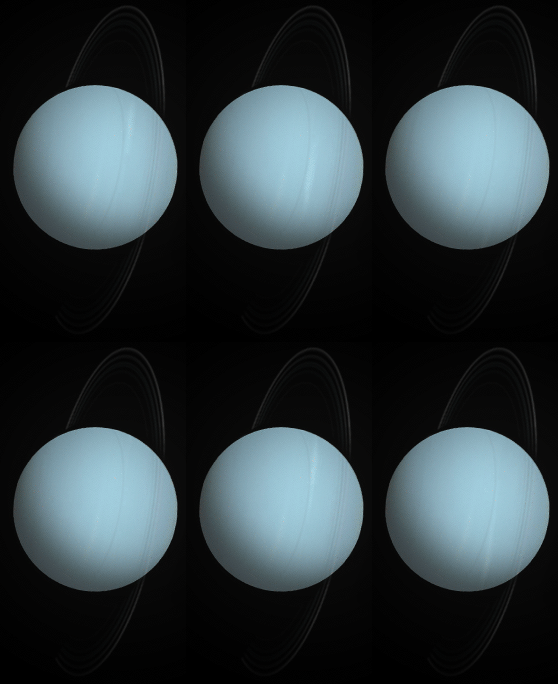
Uranus is the seventh planet from the Sun. It is a gaseous cyan-coloured ice giant. Most of the planet is made of water, ammonia, and methane in a supercritical phase of matter, which in astronomy is called 'ice' or volatiles. The planet's atmosphere has a complex layered cloud structure and has the lowest minimum temperature of 49 K (−224 °C; −371 °F) out of all the Solar System's planets. It has a marked axial tilt of 82.23° with a retrograde rotation period of 17 hours and 14 minutes. This means that in an 84-Earth-year orbital period around the Sun, its poles get around 42 years of continuous sunlight, followed by 42 years of continuous darkness.

Like the other giant planets, Uranus has a ring system, a magnetosphere, and 28 orbiting natural satellites. Its ring system is extremely dark, with only about 2% of the incoming light reflected. Uranus's satellite system contains 18 known regular moons, of which 13 are small inner moons. Further out are the larger five major moons of the planet: Miranda, Ariel, Umbriel, Titania, and Oberon. Orbiting at a much greater distance from Uranus are the nine known irregular moons. The planet's magnetosphere is highly asymmetric and has many charged particles, which may be the cause of the darkening of its rings and moons.
Atmospheric Composition

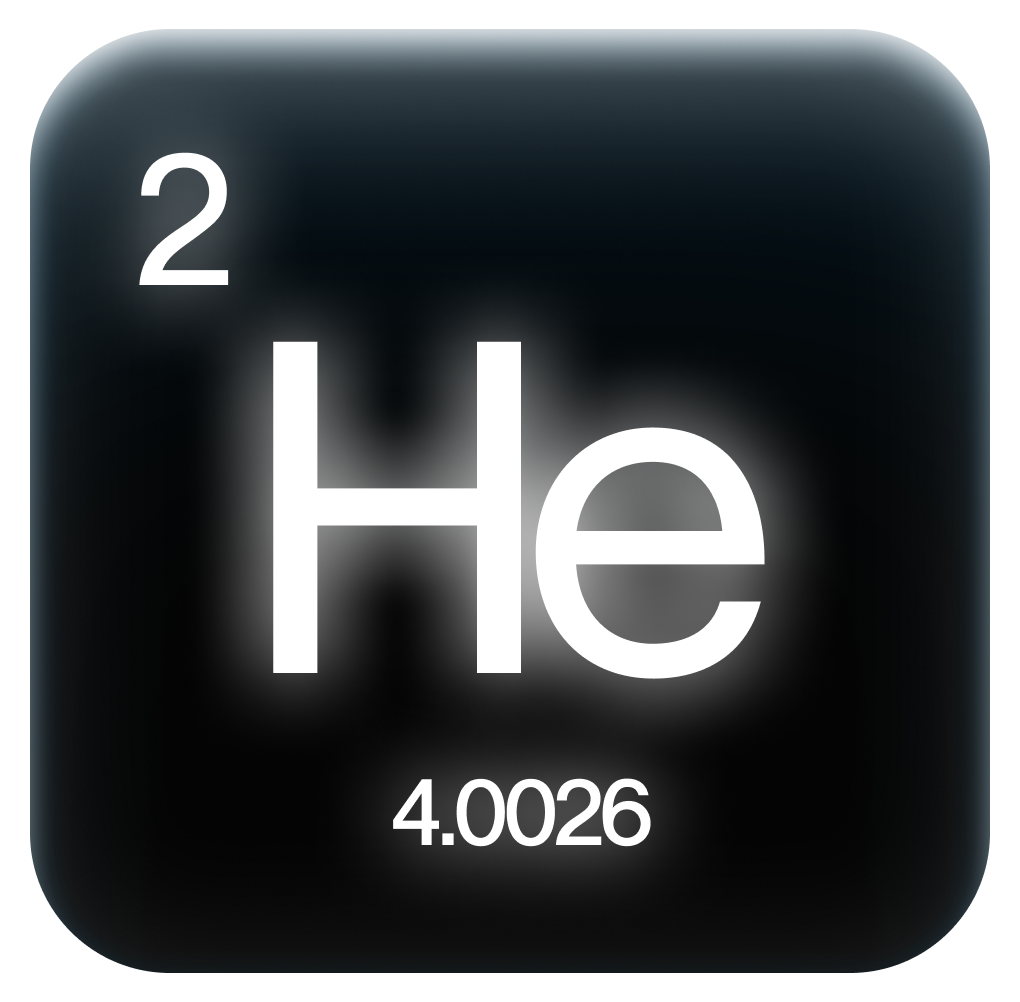
Helium
Helium (He)
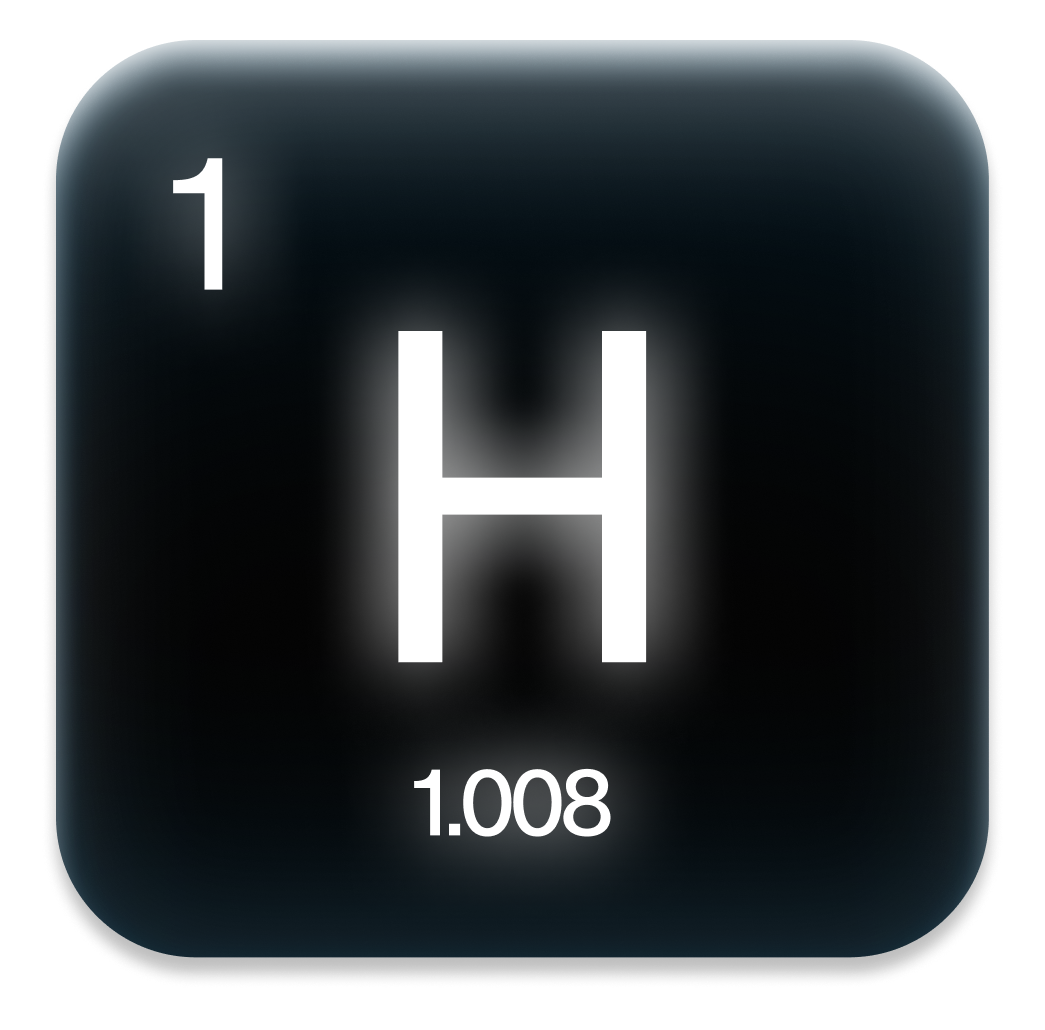
Hydrogen
Hydrogen (H₂)
Methane
Methane (CH₄)

Mean distance from the Sun

2,870,972,200 km


Surface Area

8,100,000,000 km²


Mass

8.6849×10²⁵ kg


Volume

6.834×10¹³ km³


Mean Surface Temperature

76 K (-197.15ᵒC)


Moons/Natural Satellites

Moon Rotate

Titania


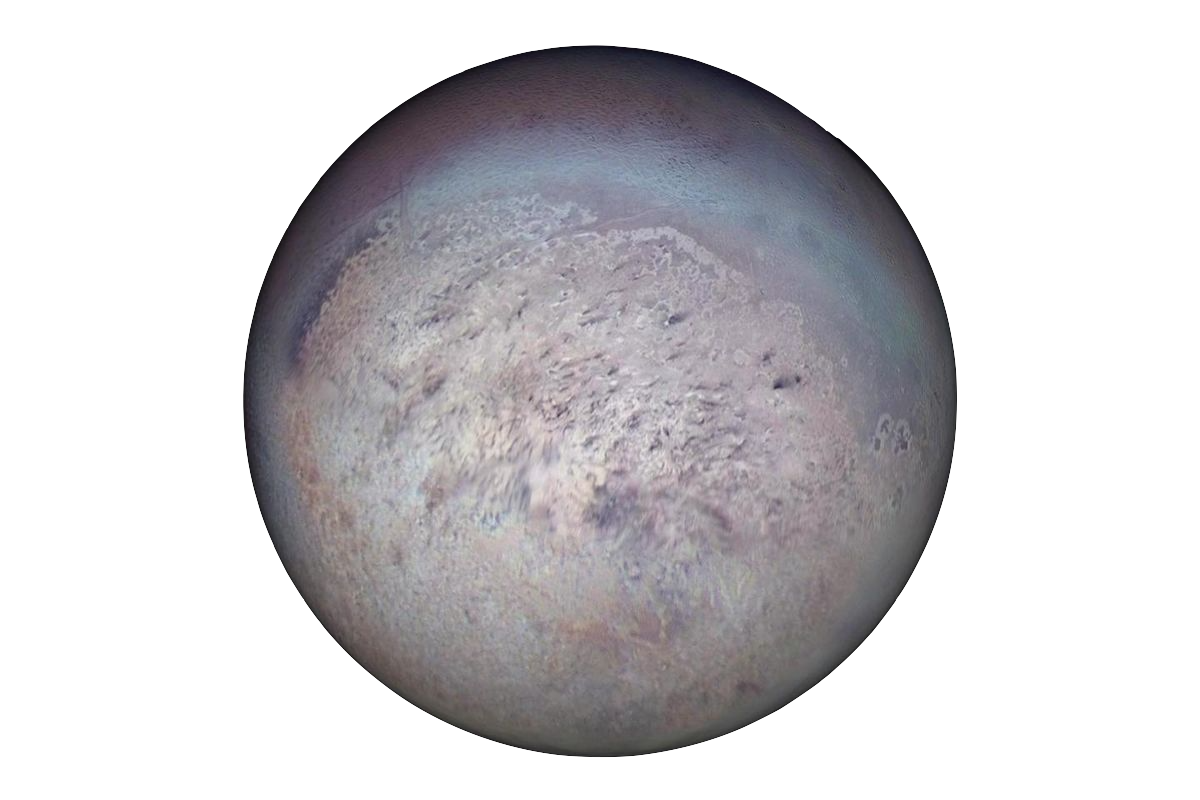
Titania , also designated Uranus III, is the largest of the moons of Uranus and the eighth largest moon in the Solar System at a diameter of 1,578 kilometres (981 mi). Its surface, which is relatively dark and slightly red in color, appears to have been shaped by both impacts and endogenic processes. It is covered with numerous impact craters reaching up to 326 kilometres (203 mi) in diameter, but is less heavily cratered than Oberon, outermost of the five large moons of Uranus. It may have undergone an early endogenic resurfacing event which obliterated its older, heavily cratered surface.

Moon Rotate

Oberon


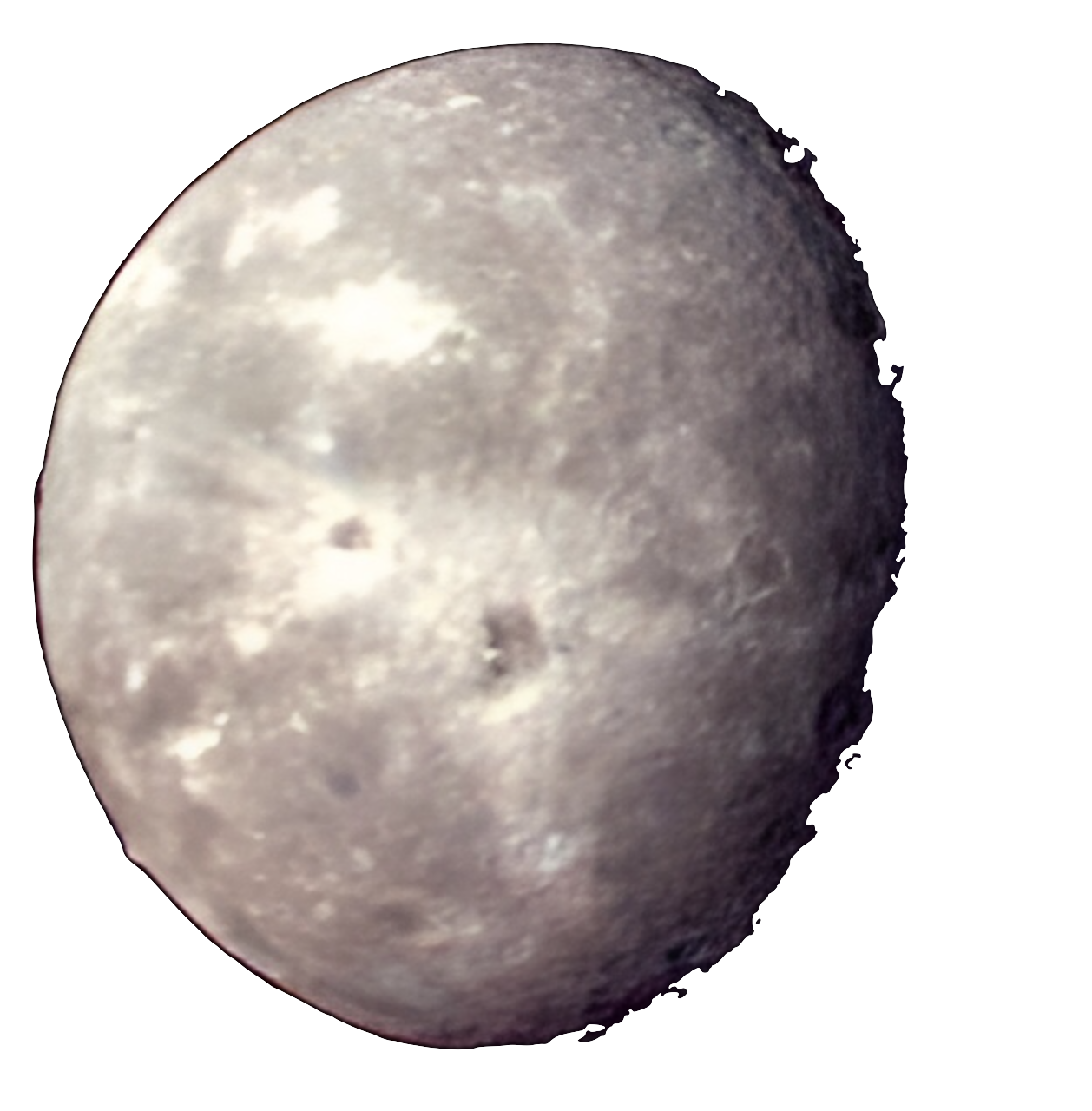
Oberon, also designated Uranus IV, is the outermost major moon of the planet Uranus. It is the second-largest, with a surface area that is comparable to the area of Australia, and second most massive of the Uranian moons, and the tenth most massive moon in the Solar System. Oberon likely formed from the accretion disk that surrounded Uranus just after the planet's formation. The moon consists of approximately equal amounts of ice and rock, and is probably differentiated into a rocky core and an icy mantle. A layer of liquid water may be present at the boundary between the mantle and the core. The surface of Oberon, which is dark and slightly red in color, appears to have been primarily shaped by asteroid and comet impacts.

Moon Rotate

Umbriel


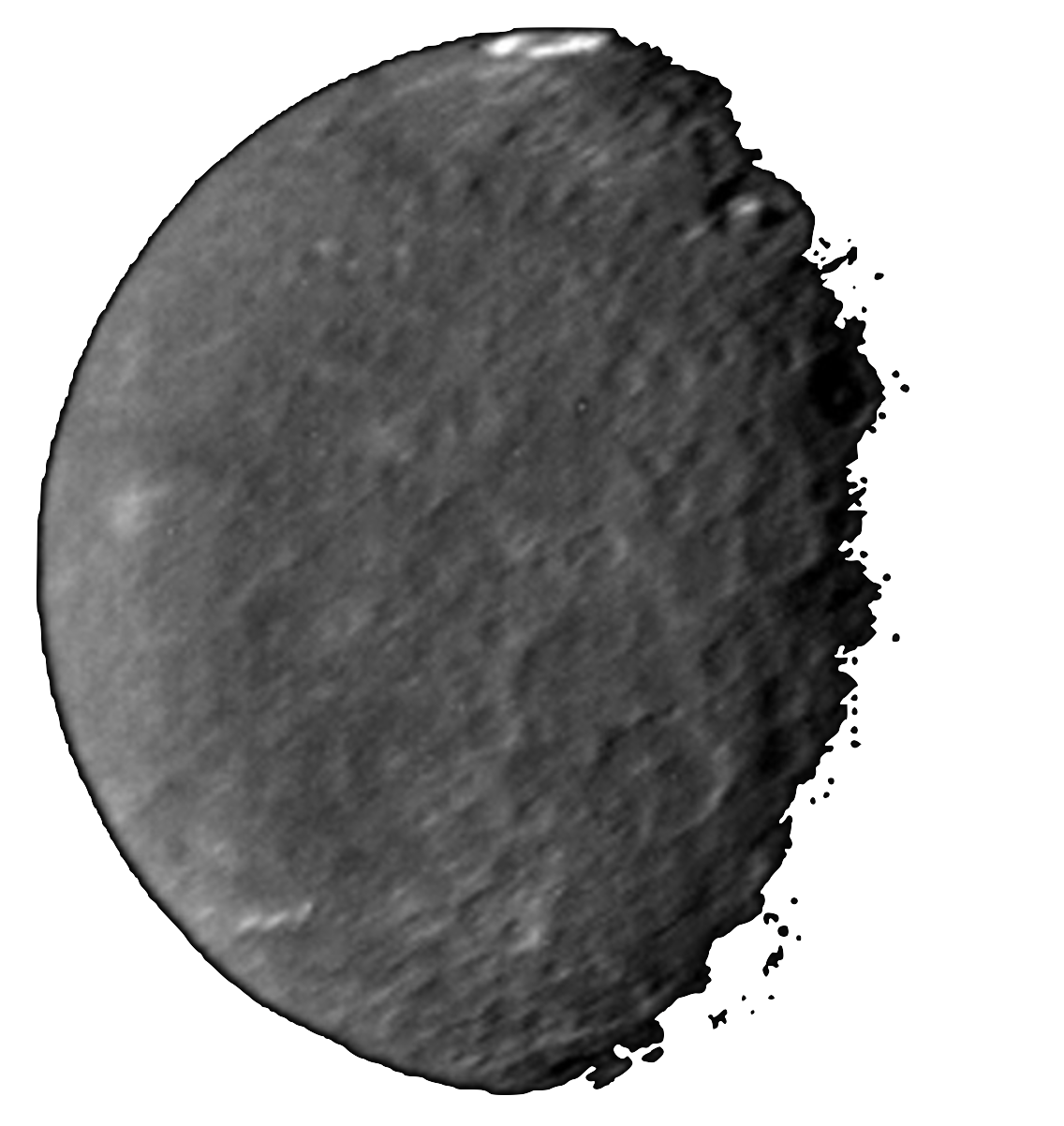
Umbriel is a moon of Uranus discovered on October 24, 1851, by William Lassell. Umbriel consists mainly of ice with a substantial fraction of rock, and may be differentiated into a rocky core and an icy mantle. The surface is the darkest among Uranian moons, and appears to have been shaped primarily by impacts. However, the presence of canyons suggests early endogenic processes, and the moon may have undergone an early endogenically driven resurfacing event that obliterated its older surface. Covered by numerous impact craters reaching 210 km (130 mi) in diameter, Umbriel is the second most heavily cratered satellite of Uranus after Oberon. The most prominent surface feature is a ring of bright material on the floor of Wunda crater. This moon, like all moons of Uranus, probably formed from an accretion disk that surrounded the planet just after its formation.

Moon Rotate

Ariel


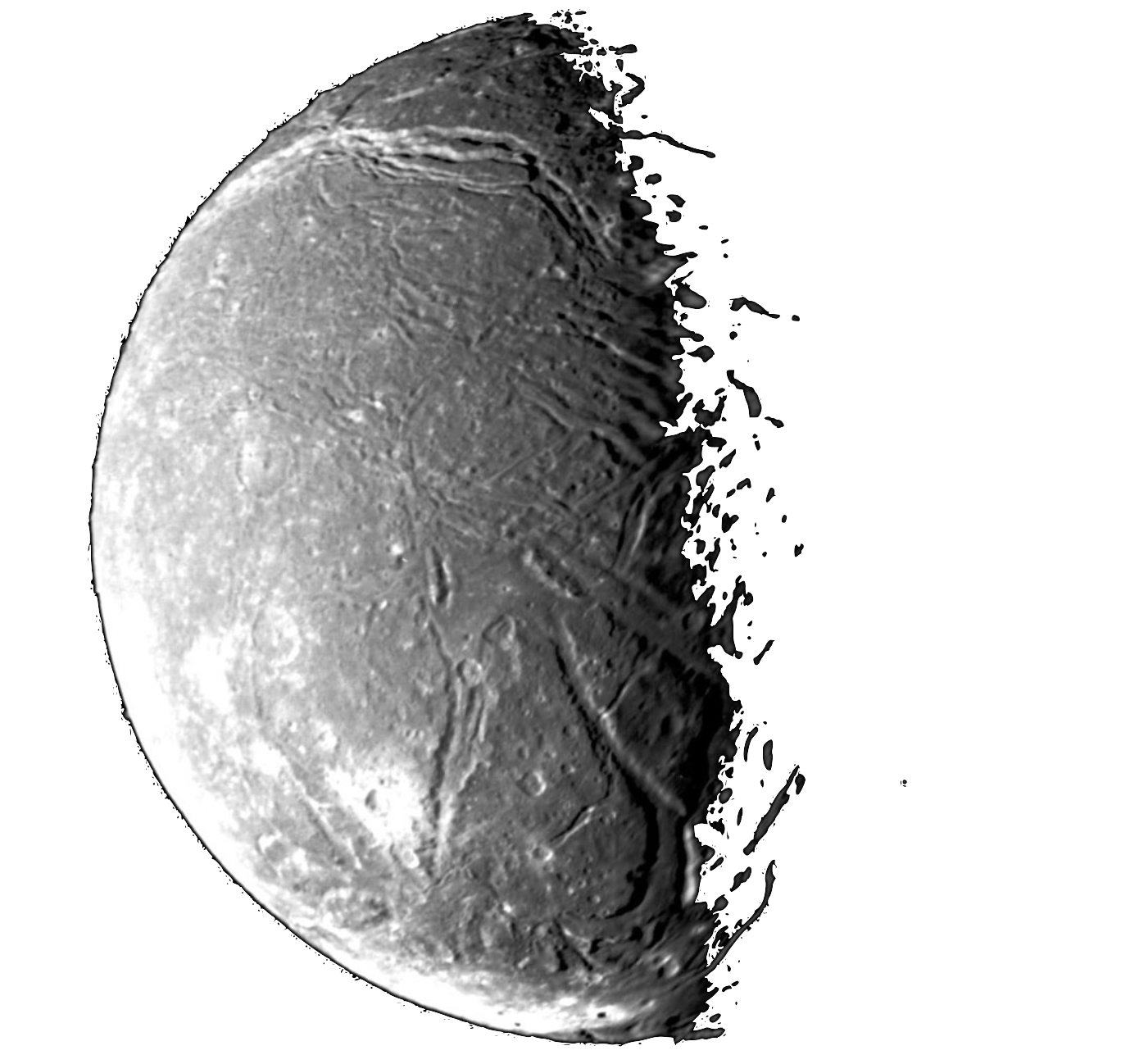
Ariel is the fourth-largest moon of Uranus. Ariel orbits and rotates in the equatorial plane of Uranus, which is almost perpendicular to the orbit of Uranus and so has an extreme seasonal cycle. After Miranda, Ariel is the second-closes of Uranus's five major rounded satellites. Among the smallest of the Solar System's 20 known spherical moons (it ranks 14th among them in diameter), it is believed to be composed of roughly equal parts ice and rocky material. Its mass is approximately equal in magnitude to Earth's hydrosphere. Like all of Uranus's moons, Ariel probably formed from an accretion disc that surrounded the planet shortly after its formation, and, like other large moons, it is likely differentiated, with an inner core of rock surrounded by a mantle of ice.

Moon Rotate

Miranda


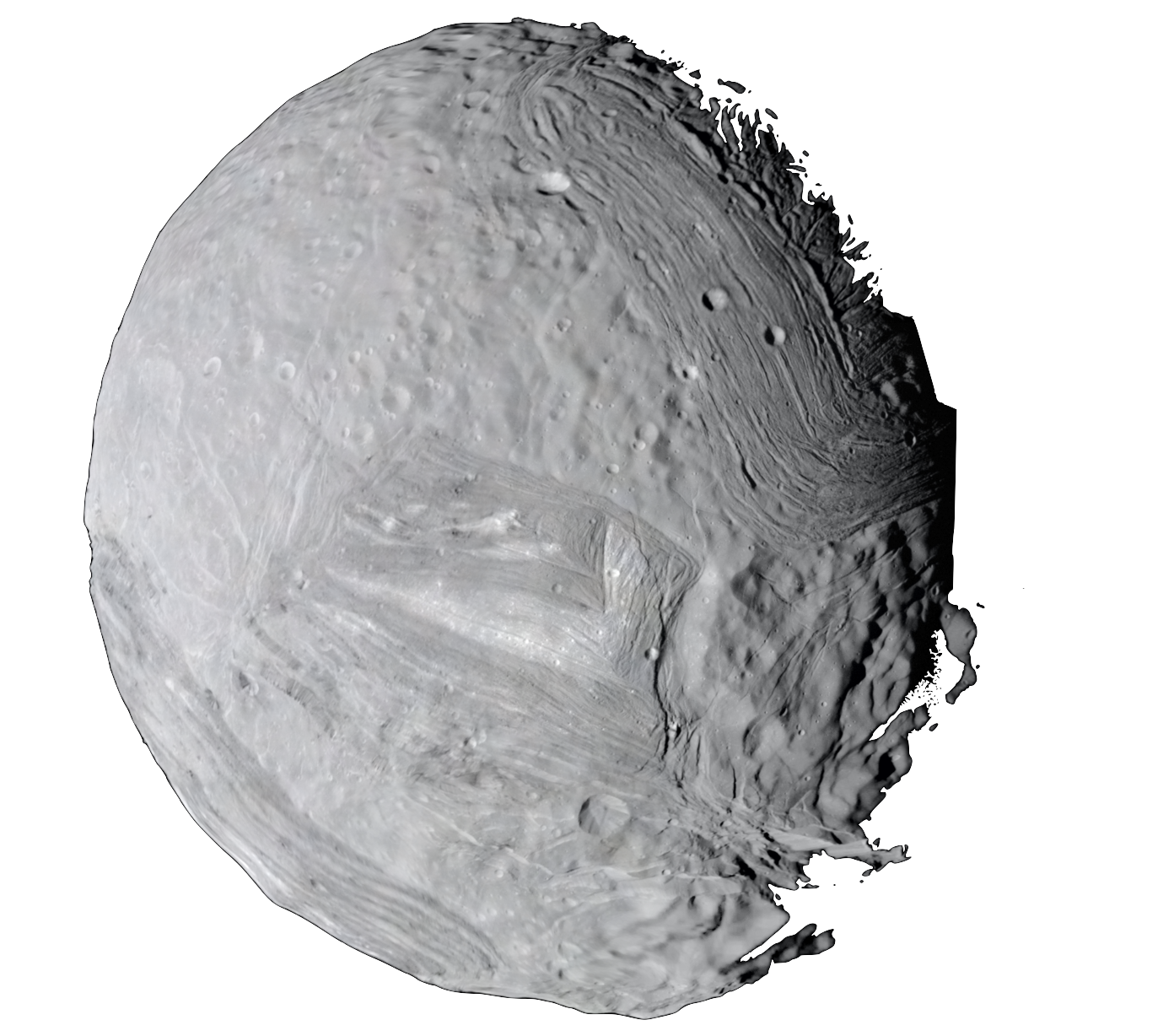
Miranda, also designated Uranus V, is the smallest and innermost of Uranus's five round satellites. At just 470 km in diameter, Miranda is one of the smallest closely observed objects in the Solar System that might be in hydrostatic equilibrium (spherical under its own gravity), and happens to have a surface area roughly similar to Texas. The only close-up images of Miranda are from the Voyager 2 probe, which made observations of Miranda during its Uranus flyby in January 1986. Miranda probably formed from an accretion disc that surrounded the planet shortly after its formation, and, like other large moons, it is likely differentiated, with an inner core of rock surrounded by a mantle of ice

The other 23 moons of Uranus

  • Puck
  • Portia
  • Rosalind
  • Belinda
  • Cressida
  • Desdemona
  • Juliet
  • Ophelia
  • Bianca
  • Cordelia
  • Caliban
  • Sycorax
  • Prospero
  • Setebos
  • Stephano
  • Trinculo
  • Francisco
  • Margaret
  • Ferdinand
  • Perdita
  • Mab
  • Cupid
  • S/2023 U 1


Mercury PNG
Uranus