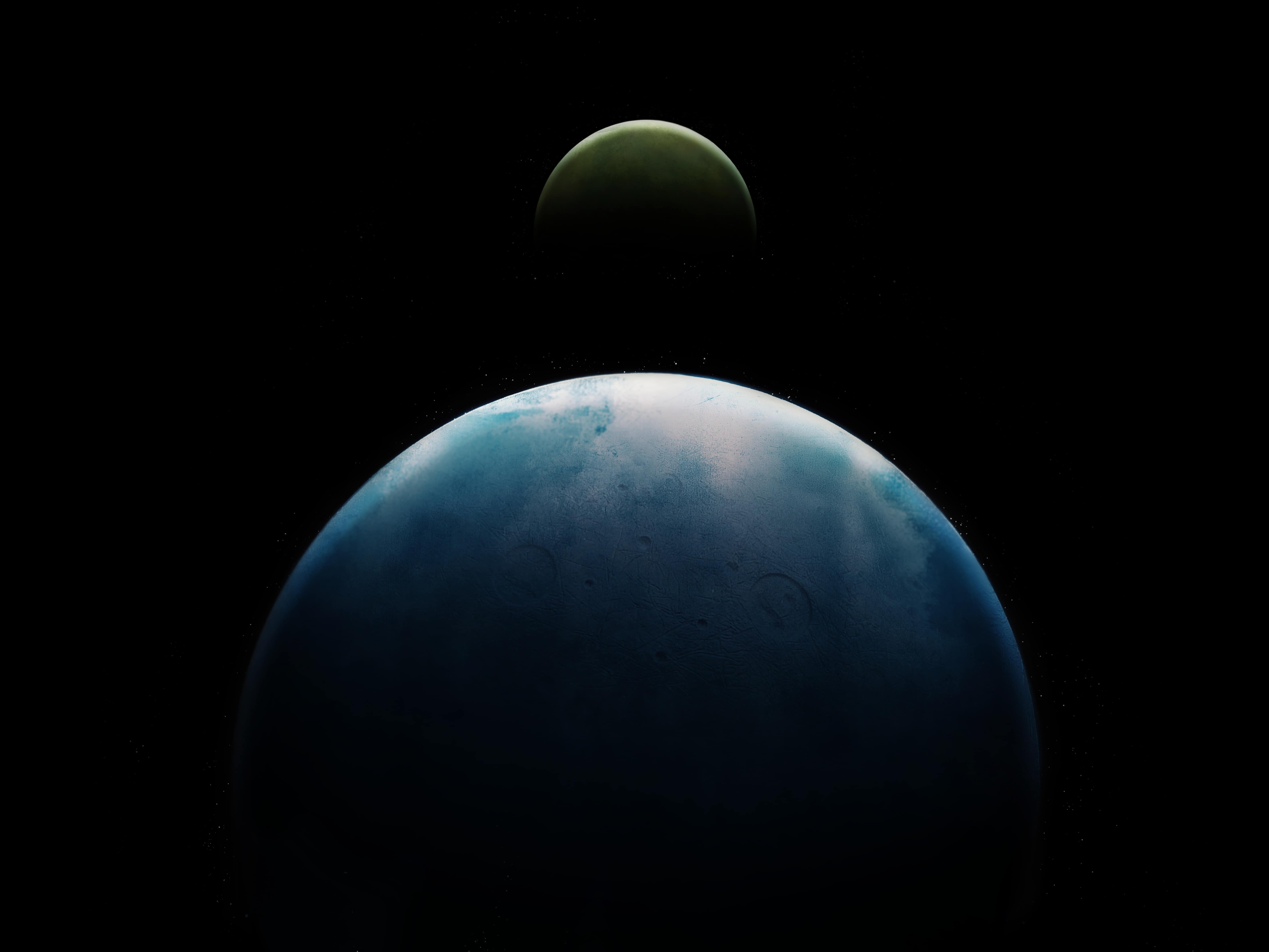
The word planet comes from the Greek word for wanderer: planets were originally defined as objects that moved in the night sky with respect to a background of fixed stars. It wasn’t until the 2006 IAU General Assembly in Prague that astronomers attempted to agree upon a formal definition of the word. Modern science provides a wealth of information, and many scientific studies have been used to help astronomers formulate their definition. For example, observations in the outer regions of the Solar System found objects that are comparable in size to Pluto. These discoveries, and more, called into question whether these newly found objects should also be considered planets or if they should comprise their own class of objects in the Solar System.
Planets in our solar system are divided into 2 categories, Inner/Terrestrial Planet and Outer Planet
Inner/Terrestrial Planets
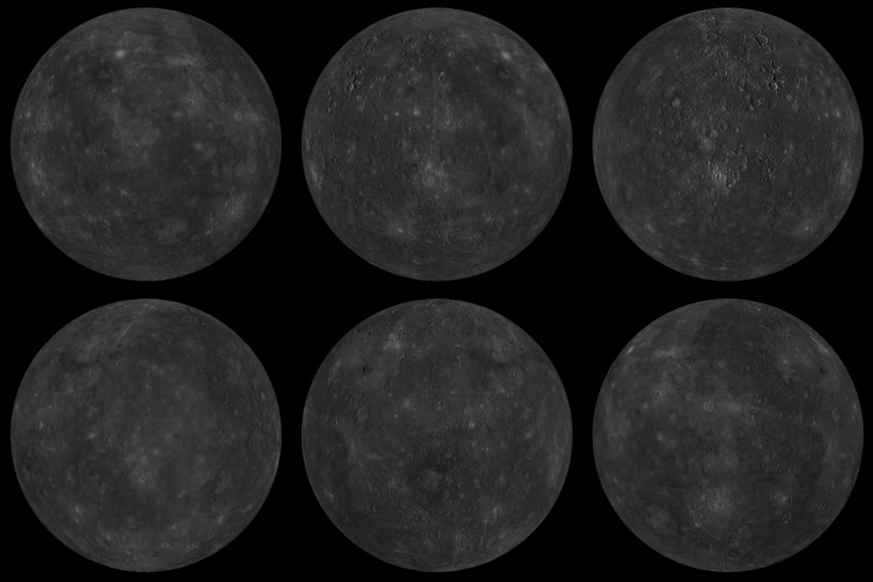
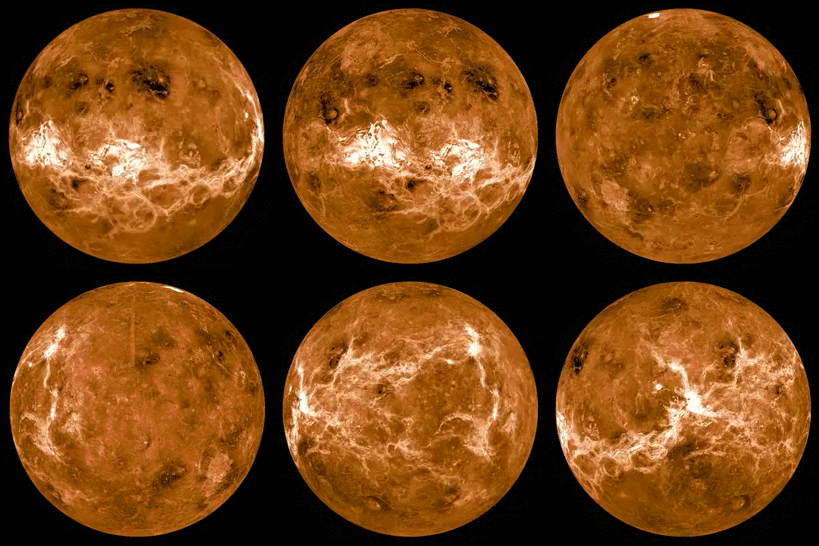
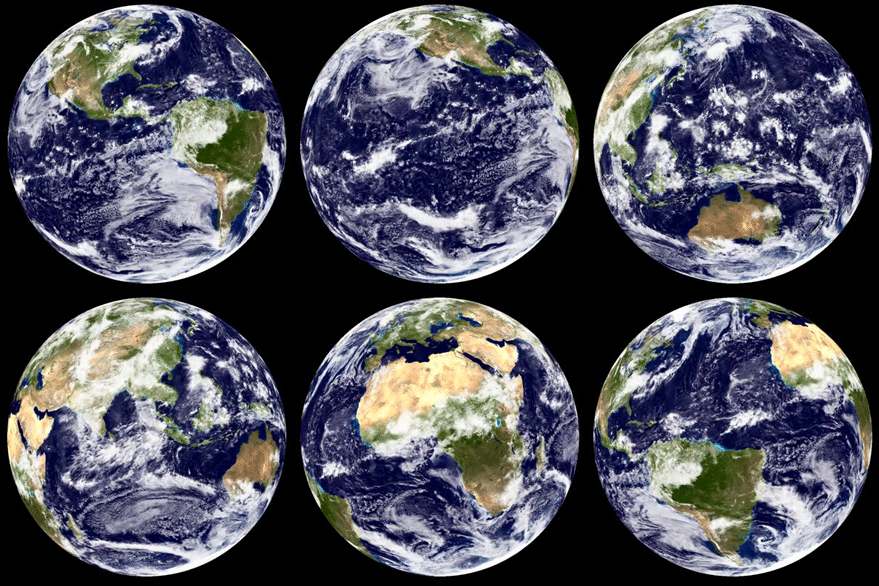
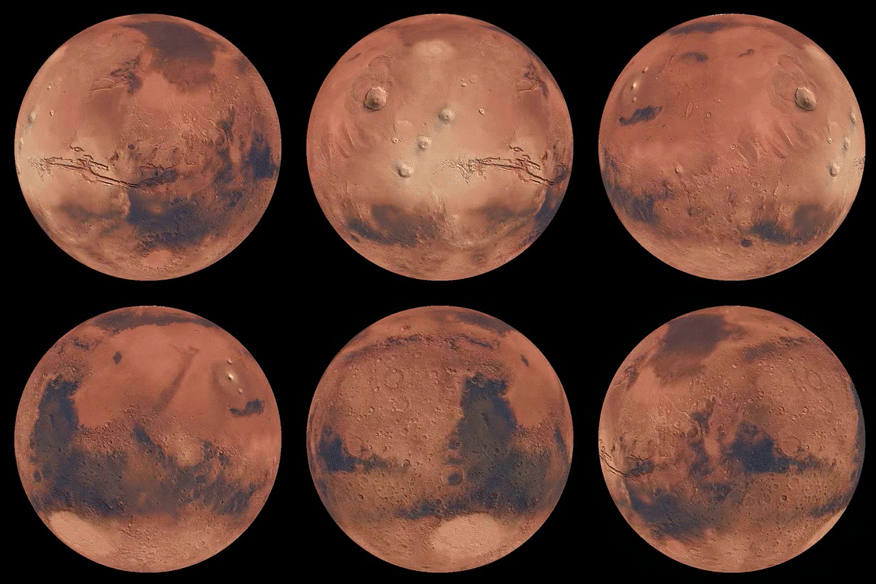
Eight planets have been discovered in our solar system. Mercury, Venus, Earth, and Mars are the planets closest to the Sun. They are called the inner/terrestrial planets. The inner planets are made up mostly of rock. All terrestrial planets in the Solar System have the same basic structure, such as a central metallic core (mostly iron) with a surrounding silicate mantle. Terrestrial planets can have surface structures such as canyons, craters, mountains, volcanoes, and others, depending on the presence at any time of an erosive liquid or tectonic activity or both.
Click the following to see more about each planet:
Outer Planets (Gas Giants and Ice Giants)
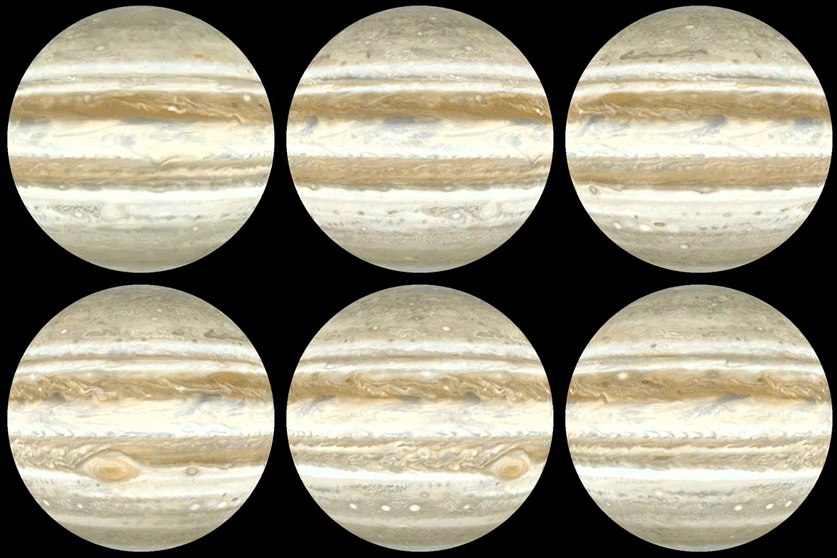
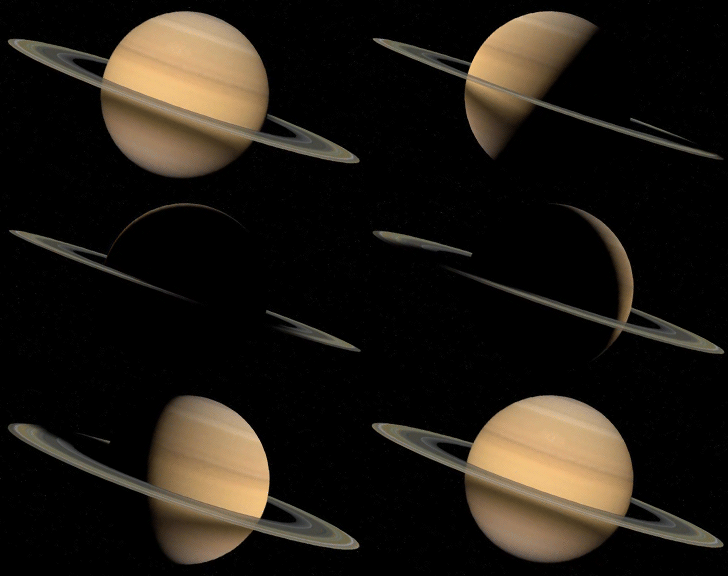
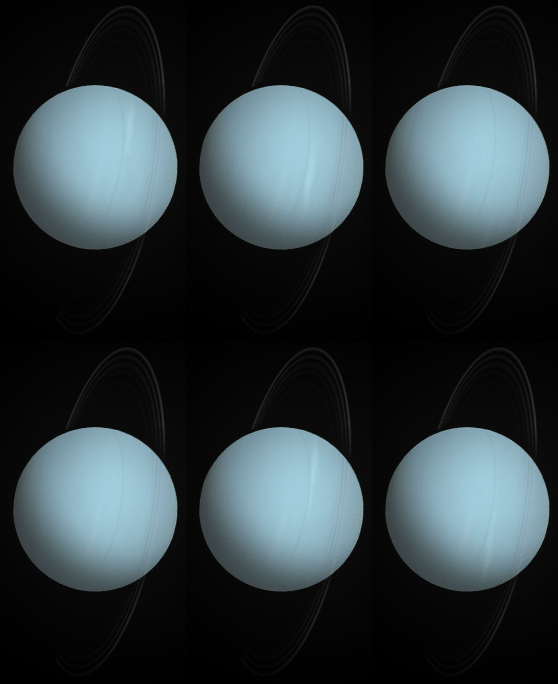
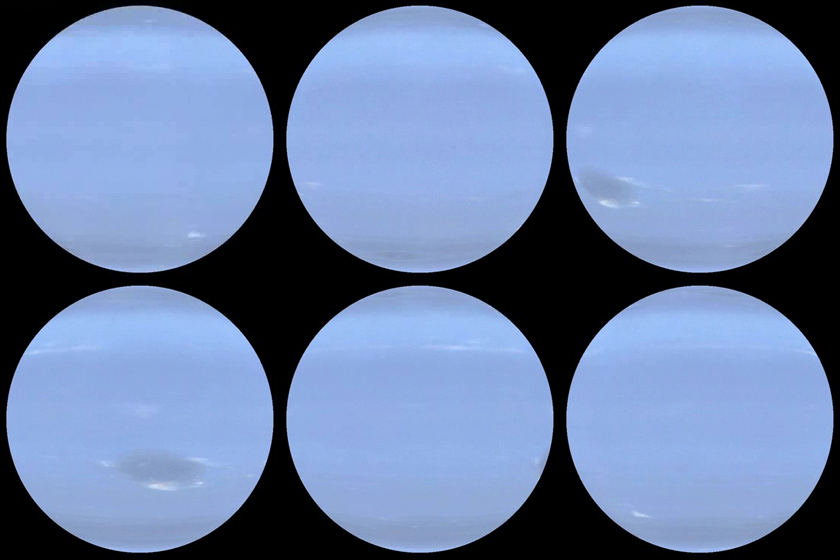
TThe outer planets are Jupiter, Saturn, Uranus, and Neptune. Jupiter, Saturn, Uranus, and Neptune are large balls of gases with rings around them. All eight planets travel around the Sun in a different orbit. In its orbit, there are not many other objects like the planet.
Click the following to see more about each planet: