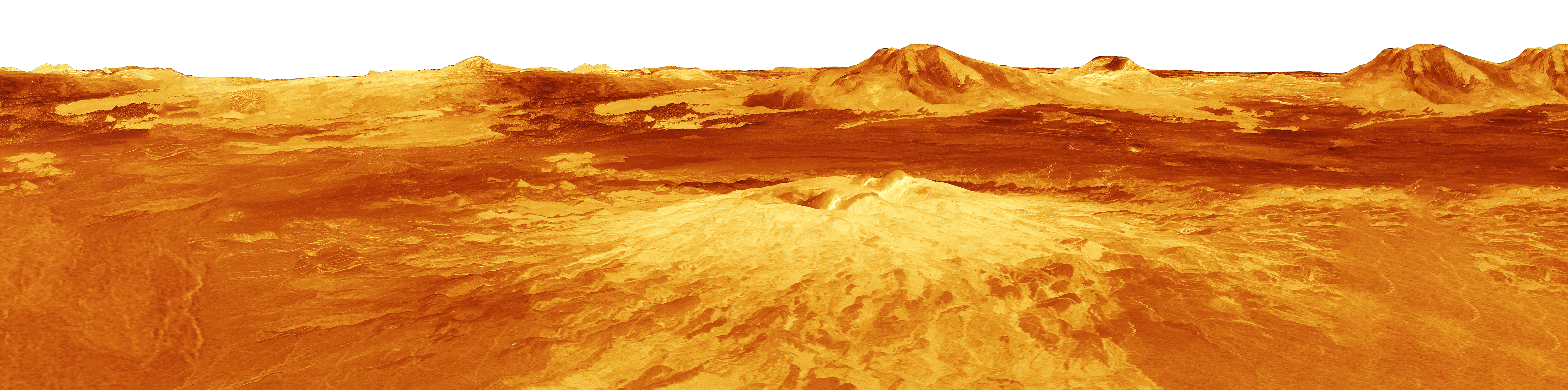
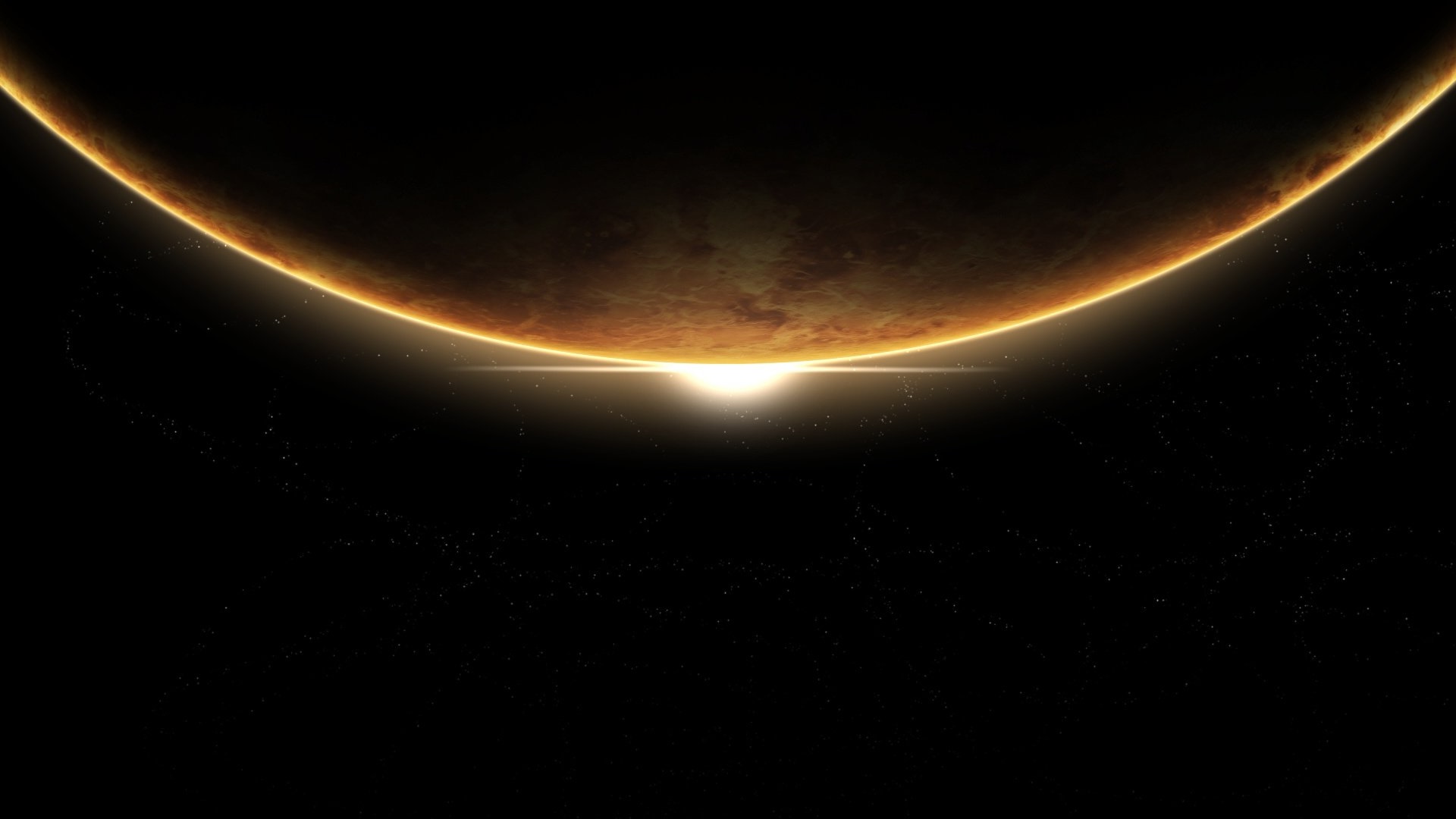

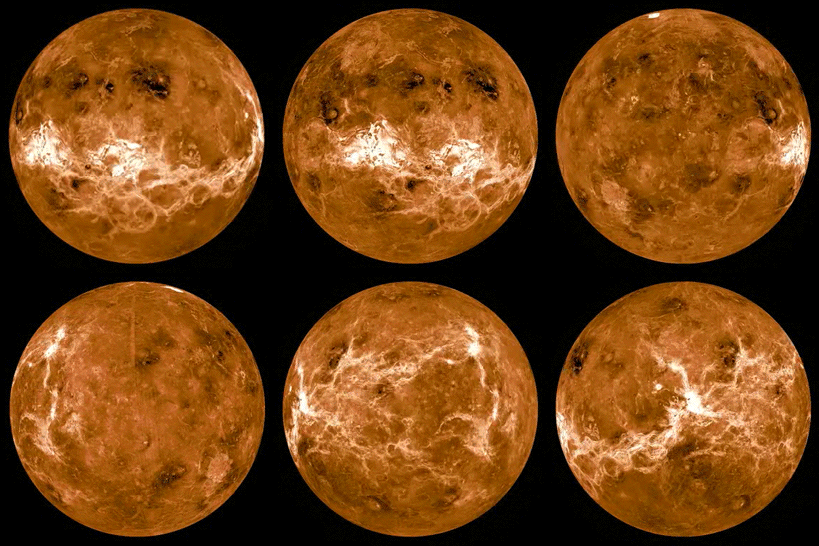
Venus is the second planet from the Sun. It is a terrestrial planet and is the closest in mass and size to its orbital neighbour Earth. Venus is notable for having the densest atmosphere of the terrestrial planets, composed mostly of carbon dioxide with a thick, global sulfuric acid cloud cover. At the surface it has a mean temperature of 737 K (464 °C; 867 °F) and a pressure of 92 times that of Earth's at sea level. These conditions are extreme enough to compress carbon dioxide into a supercritical state close to Venus's surface.
Internally, Venus has a core, mantle, and crust. Venus lacks an internal dynamo, and its weak induced magnetosphere is instead caused by atmospheric interactions with the solar wind. Internal heat escapes through active volcanism, resulting in resurfacing instead of plate tectonics. Venus is one of two planets in the Solar System that have no moons. The rotation of Venus has been slowed and turned against its orbital direction (retrograde) by the strong currents and drag of its atmosphere. It takes 224.7 Earth days for Venus to complete an orbit around the Sun, and a Venusian solar year is just under two Venusian days long. The orbits of Venus and Earth are the closest between any two Solar System planets, approaching each other in synodic periods of 1.6 years. Venus and Earth have the lowest difference in gravitational potential of any pair of Solar System planets.